Throughout the modern era, photography has been enlisted to classify the world and its people. Driven by a belief in the scientific objectivity of photographic evidence, the logics utilized to classify photographs-in groups and categories or sequences of identically organized images-also shape our visual consciousness. In the twenty-first-century, new digital technologies and globalization have radically transformed the applications of photography, making the reconsideration of photographic information systems ever more urgent.
— from The Order of Things, an exhibition at the Walther Collection, 2015
Questions to cover in Visual Diary/Behance
- What is a typology?
- Provide some examples of how photographers have used typology in their work.
Tiffany’s Examples of Typologies
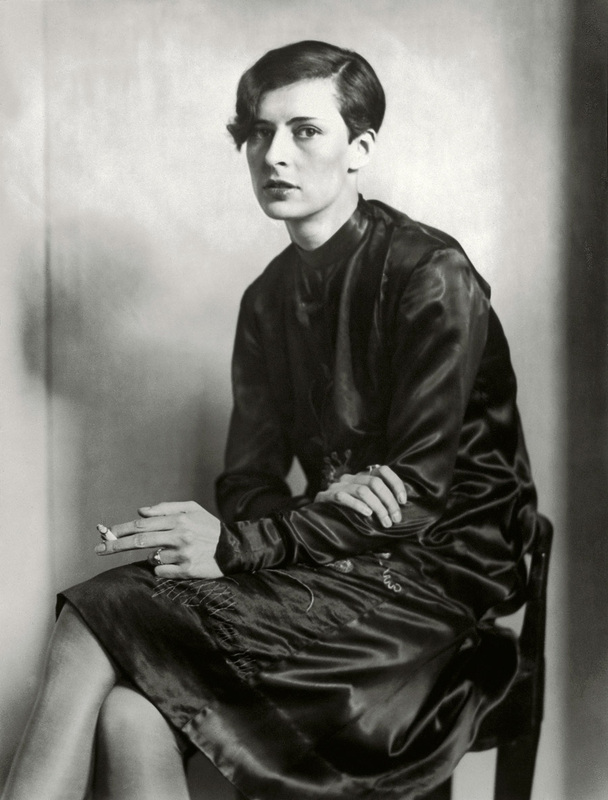
August Sander – The Face of Our Time
| One of the first photographic typological studies was by the German photographer August Sander, whose epic project ‘People of the 20th Century‘ (40,000 negatives were destroyed during WWII and in a fire) produced volume of portraits entitled ‘The Face of Our Time’ in 1929. Sander categorised his portraits according to their profession and social class. (click the “People of the 20th Century” link above to view more images) |
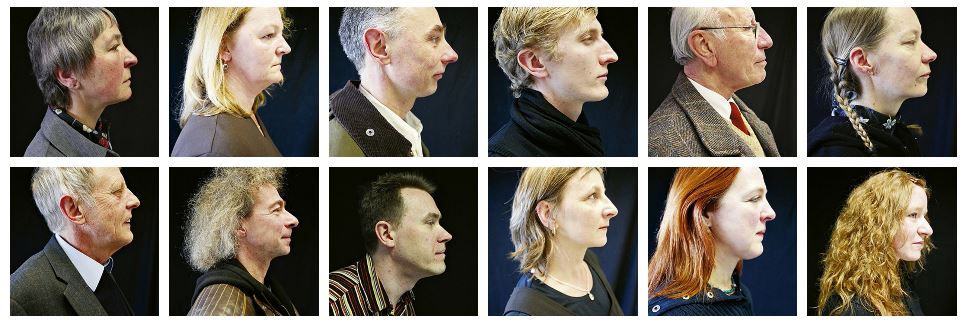
Boris Mikhailov – German Portraits
Nearly a century after August Sander’s portraits of German society, the Ukrainian photographer Boris Mikhailov created a series of pictures of the amateur actors in a German theatre company in the town of Braunschweig. Shot in profile against a black background, the photographer makes reference to Sander’s typological study. The profile portrait also encourages the viewer to make formal comparisons between the sitters. Mikhailov’s portraits and those of August Sander were exhibited together in 2012.
Bernd and Hilla Becher – Typologies of industrial architecture
The husband and wife team of Bernd and Hilla Becher began photographing together in 1959. Bernd (1931–2007) and Hilla (b. 1934) Becher documented architectural forms referred to as “anonymous sculpture” for over thirty years. Their extensive series of water towers, blast furnaces, coal mine tipples, industrial facades, and other vernacular industrial architecture comprise an in-depth study of the intricate relationship between form and function. Many books on their work are in publication, each titled after the industrial structure that they document.

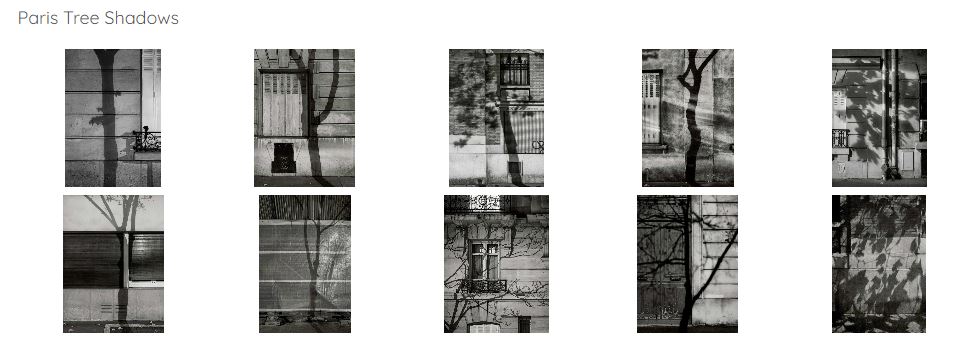
Michael Wolf – Paris Tree Shadows (and other urban phenomena)
Michael Wolf’s early career as a photo journalist is perhaps evident in his various studies of urban life. He documents repetitive features of the urban landscape, clearly influenced by the deadpan approach of the Dusseldorf School and the New Topographics photographers. However, Wolf’s approach appears more concerned with the symbolic role played by mundane items such as his ‘bastard chairs‘ which suggest the density of the urban environment of Hong Kong and the human ingenuity of its inhabitants. Wolf often uses a strict typological approach, as in his series ‘100 x 100‘, repeating the same vantage point.
However, Wolf is always interested in the individuality of his human subjects and the tremendous visual variety of the interiors in which they live. He often displays his images in groups or in series to draw attention to repetitive phenomena. There is humour and poetry in these groupings. A good example of this is the beautiful and subtle “Paris Tree Shadows’ series.

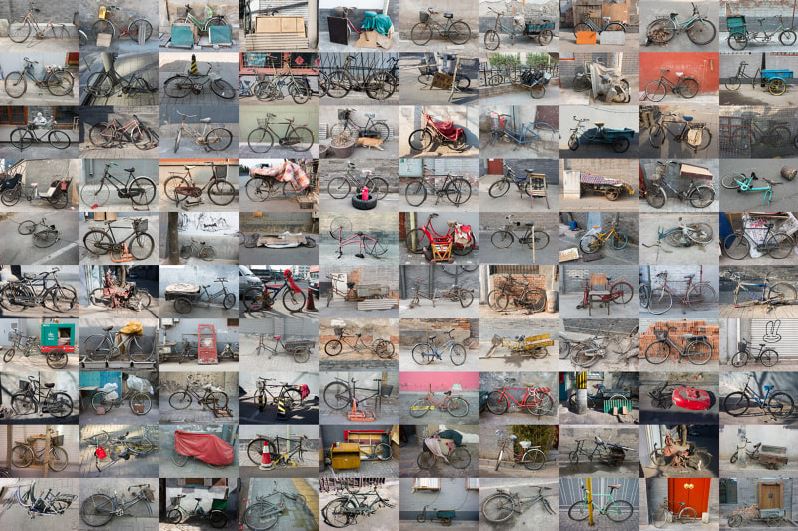
Zhao Xiaomeng – Bicycles in Beijing, Now
The fate of the bicycle can tell us a lot about the modern Chinese economy. As it thunders remorselessly towards ever greater industrialisation, the car has superseded the bicycle as the preferred mode of transport. In cities like Beijing, bikes have become relics of a bygone age, no longer a symbol of a unifying culture of cycling but rather emblems of social marginalisation. This moving typology by artist Zhao Xia0meng documents a radical change in people’s living conditions and economic circumstances through portraits of their bikes, some of which still cling to the last remnants of a useful life.

Some typology ideas:
Documenting repeated forms where you live and work. eg –
- front doors on the street where you live
- cracks in the pavement
- fences and walls
- the colours of all the cars in the supermarket car park
- telegraph poles viewed from below
- TV aerials/chimneys silhouetted against the sky
- mugs/cups in your kitchen cupboard seen from above
- your friends’ hairstyles seen from behind
- all the things you eat in a week
- all of your clothes laid out one piece at a time on your bedroom floor … etc.
Interesting links for more information:
- Typologist – a Tumblr blog
- Typologies Flickr Group
- Typologies article
- Steve Tyler’s series Typologies of Mass Consumption
- A great blog post about Typologies
 Photography with Tiffany